Drinks as Design: How Themed Menus Turn Parties into Tiny Innovation Labs
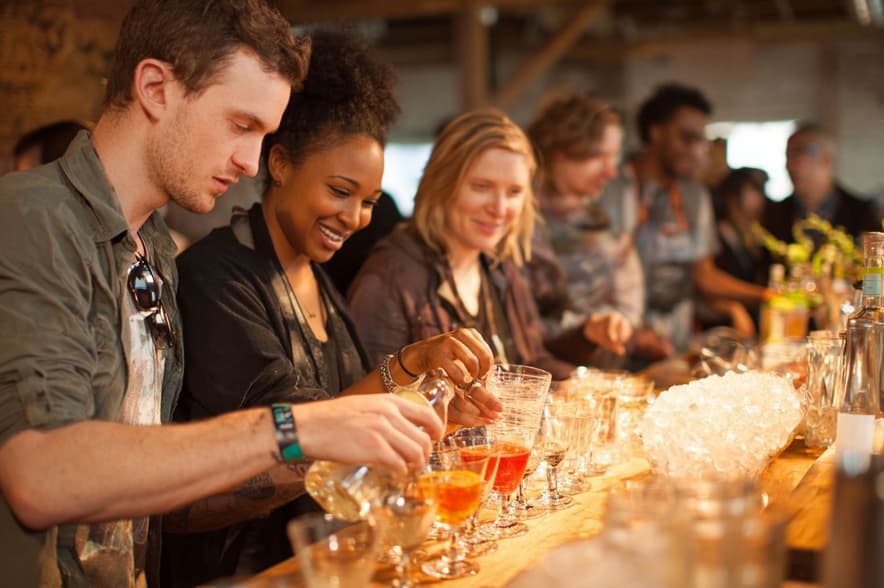
The future of ideas isn’t confined to research centers or boardrooms. It also bubbles up in kitchens, community halls, and back gardens—especially around a thoughtfully designed drinks table. Beverages are fast, forgiving prototypes for world-building: they are cheap to iterate, easy to brand, highly photogenic, and capable of shifting group mood within minutes. A clever menu can demonstrate inclusion, sustainability, narrative flow, and even data literacy—without a single slide deck.
This essay explores drinks as a creative R&D medium: how to use themed beverages to prototype experiences, test cultural narratives, and gather lightweight insights. Along the way, two practical collections—one non-alcoholic, one alcoholic—offer ready-to-use scaffolding for inclusive menus and storytelling. For sober-curious or all-ages contexts, see these non-alcoholic drinks for Harry Potter party; for adult evening formats, consider the companion set of magical Harry Potter-themed alcoholic drinks. Think of them as a parts bin: pre-imagined flavors, names, and presentation ideas you can reframe for any storyworld.
Why drinks make exceptional prototypes
1) Speed and reversibility.
A drink recipe is a rapid iteration cycle. Tweak acid, sweetness, dilution, garnish, or glassware and the concept pivots instantly. No craft disaster, no sunk cost—just a new batch.
2) High signal, low noise.
Guests understand the grammar of a bar. Minor changes communicate meaning: a smoky spritz suggests mystery; a color-shift tea telegraphs “alchemy.” The container and ritual—shake, stir, pour—carry narrative as strongly as flavor.
3) Built-in inclusivity levers.
A dual-track menu (alcoholic/non-alcoholic twins) lets every guest belong without calling attention to constraints. The mocktail isn’t an afterthought; it’s a parallel hero with its own ceremony.
4) Measurable moments.
You can log dwell time, selection ratios, and return visits with simple tally sheets or QR taps—useful proxies for interest, clarity, or friction in any experiential design.
A story-first framework for themed menus
Every strong experience has a beginning, middle, and end. Drinks can carry that arc:
- Arrival (Orientation): Low-ABV or zero-proof spritzers with bright acid and aromatics; names and signage clarify the world you’re entering.
- Middle (Choice & Play): The menu forks into families—herbal, smoky, floral, sparkling—mirroring character houses, factions, or elemental schools. Guests explore identity via taste.
- Finale (Resolution): One ceremonial pour (tableside color change, flaming peel in safe contexts, or a fragrant mist) marks the narrative peak and invites a group toast.
Use the non-alcoholic and alcoholic collections linked above as modular scenes. A butterfly-pea infusion that turns violet with citrus becomes “transfiguration” in any mythology; a spiced ginger elixir reads as “forge” or “dragon fire,” depending on costume and copy.
Inclusion by design, not apology
Powerful experience design treats inclusion as a creative constraint, not a compliance checkbox. Dual menus ensure parity of dignity:
- Naming: Avoid “mock-” prefixes that imply lack. Give zero-proof drinks original names and lore.
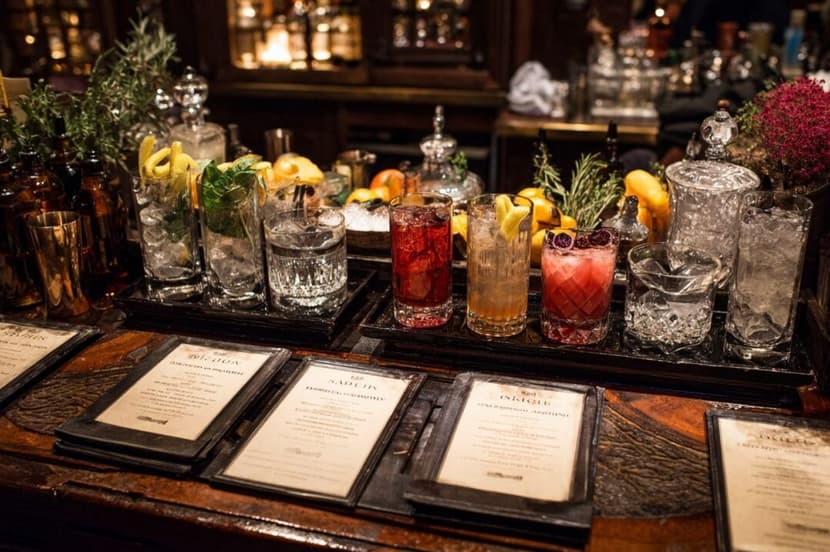
- Glassware: Serve non-alcoholic and alcoholic in equally beautiful vessels with equally theatrical garnishes.
- Order of operations: Let guests choose their track at the same point in the journey—no separate line, no lesser ritual.
- Transparency: Ingredient icons (vegan, halal-friendly, caffeine-free) remove guesswork and cognitive load.
The non-alcoholic guide offers colorful templates (herbal coolers, fruit-forward fizzes) that stand shoulder-to-shoulder with the alcoholic set’s bitters, infusions, and stirred classics. Together they demonstrate that inclusion can heighten—not flatten—aesthetic impact.
Sensory prototyping: five dials to turn
- Acid: Citrus, verjus, shrub. Acid brightens narrative “hope.”
- Sweetness: Simple syrup, honey, demerara, or fruit purée. Sweetness signals safety or nostalgia; dial down for “edgy” scenes.
- Bitterness: Tea, gentian, cacao nibs, or NA amaros. Bitter frames complexity, adulthood, or moral ambiguity.
- Aromatics: Expressed citrus oils, herb sprigs, spice smoke under a cloche (use NA options where needed). Aroma is the fastest way to plant a memory.
- Texture: Egg white aquafaba foam, bubbles, crushed ice vs. big cubes. Texture communicates terrain—silken for “courtly,” pebbled for “marketplace.”
Each dial maps to story beats. A sequence that moves from bright to complex to warm mirrors a classic quest structure.
Sustainability as a creative brief
The future of ideas is also the future of resources. Drinks can model circular design:
- Ingredient cascades: Zest → syrups; spent citrus → oleo saccharum; herb stems → infusions; leftover pulp → popsicles.
- Localism: Feature regional botanicals to reduce freight and embed place into flavor.
- Reusables: Glass carafes, washable napkins, metal straws. Ritual doesn’t require waste.
- Data minimalism: If you collect preference data via QR menu, do it opt-in, store locally, anonymize, and delete on schedule.
Sustainability constraints spur invention: a commitment to no single-use garnishes might yield a signature reusable pick with a tiny enamel charm guests keep.
The microeconomics of delight
A drinks lab is a lever for disproportionate value:
- Cost control: Pre-batch bases; scale 4–5 SKUs into 10–12 named serves via different citrus, bitters, or garnishes.
- Throughput: One shaken, one stirred, one built—enough variety without service jams.
- Perceived luxury: A simple syrup with unusual spice (cardamom, pink peppercorn) feels premium for pennies.
- Merch gravity: Branded recipe cards or enamel pins turn memory into artifact; an email recipe “drop” turns guests into subscribers.
Track line length, service times, and depletion rates like a product team; your next event becomes measurably better.
Ethical world-building and IP awareness
A themed menu naturally brushes popular IP. Keep it playful and fair:
- Nomenclature: Use allusive language rather than trademarked names; let the copy wink without copying.
- Aesthetics: Avoid direct reproduction of protected logos or typefaces on menus.
- Cultural respect: If drawing from real traditions, credit sources and avoid sacred motifs as décor props.
- Safety first: Fire, fog, and dry ice are dramatic but non-negotiably constrained by venue policy and training.
The two linked collections offer idea scaffolds you can retitle for your own world without borrowing anyone’s brand equity.
Measuring what matters (without killing the vibe)
Insight doesn’t require clipboards. Lightweight methods work:
- Sticker votes: Place jars for each drink; guests drop a dot as they return empty glasses.
- Moment capture: Ask one question on a chalkboard (“Which potion unlocked conversation tonight?”).
- Photo telemetry: Observe which serves get photographed; that correlates with “shareworthiness,” a proxy for narrative resonance.
- Waste audit: Count melted cubes and half-finished glasses; reformulate too-sweet or too-bitter items.
Close the loop: post an after-event micro-report with three learnings, two changes for next time, and one guest-sourced recipe. Iteration signals seriousness.
A quick build: the Dual-Track Menu
- Three foundations: citrus highball, stirred aromatic, theatrical color-shift.
- Two tracks: zero-proof and spirited variants for each.
- One ceremony: a reveal moment shared by both tracks (aroma mist, garnish flourish, or table-side pour).
- Zero friction: pre-batched bases, labeled garnishes, and a visible water station.
Use the non-alcoholic collection to craft arrival spritzers and playful “alchemy” cups that suit daytime or intergenerational events. Pull one or two showpieces from the alcoholic collection for the evening crescendo. Both sets model flavor families and presentation beats you can remix into any narrative—sci-fi, folklore, futurist salon.
What this teaches about the future of ideas
- Prototyping lives everywhere. When a menu becomes a storyboard, guests co-create meaning.
- Inclusion scales creativity. Designing for multiple tracks expands—not narrows—the aesthetic field.
- Ritual is a UX primitive. A garnish, a flame, a color shift—tiny ceremonies turn attention into memory.
- Data should be kind. Measure to improve hospitality, not to surveil.
- Sustainability is style. Resource constraints birth distinctive signatures.
The drinks table is a lab bench disguised as hospitality. Treat it that way, and your next gathering becomes more than a party—it becomes a micro-conference on taste, story, and care.
Bottom line: The fastest path from idea to shared experience may be a jigger and a shaker. Use drinks to prototype narratives, include everyone with parity, and learn in public—one pour at a time. When inspiration is needed, those two curated sets—non-alcoholic delights and spirited showstoppers—provide a well of flavors and staging ideas you can adapt for any world you’re building. The future of ideas will be tasted, toasted, and iterated—cheers to designing it well.